
 English
 Français
 Español
 日本語
 العربية
 简体中文


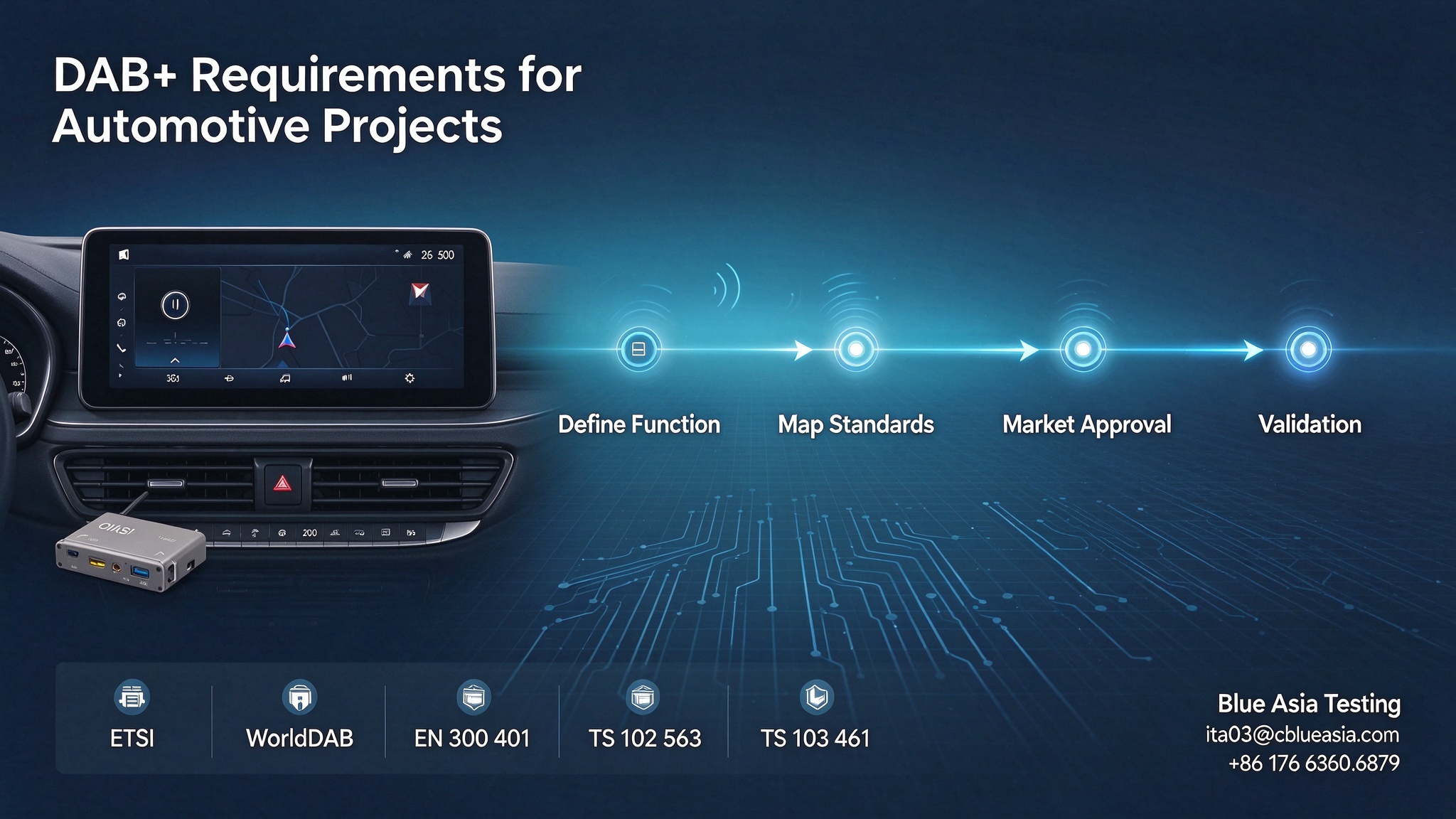
Defining DAB+ Requirements Before Starting an Automotive Project
Olivia | Blue Asia
Email: [email protected]
WhatsApp: +86 176 6360 6879
As digital radio becomes part of modern automotive infotainment systems, defining DAB+ requirements early in the development process is essential.
For automotive OEMs, Tier 1 suppliers and infotainment manufacturers, the challenge is not simply integrating a DAB+ receiver. It is understanding which technical specifications apply to the product, which receiver functions need to be supported, and how these requirements should be reflected in the project validation plan.
A clear understanding at the beginning can help reduce uncertainty during development and testing.
1. Understanding the DAB+ Technical Standards Framework
According to WorldDAB, the DAB family of technical standards covers several aspects of digital radio implementation.
These specifications are available through ETSI and address different technical areas:
DAB System
EN 300 401 – DAB system standard
TS 101 756 – Registered Tables
TS 103 176 – Rules of Implementation
Audio Coding
TS 102 563 – DAB+ audio
TS 103 466 – DAB audio
TS 101 757 – DAB audio testing
Data Transport
EN 301 234 – Multimedia Object Transfer (MOT)
TS 101 759 – Transparent Data Channel (TDC)
TS 102 427 – MPEG-2 Transport Stream
Data Applications
TS 101 499 – SlideShow
TS 102 818 – Service and Programme Information (SPI)
TS 102 980 – DL Plus
TS 102 979 – Journaline
TS 103 551 – TPEG
Receiver Requirements
TS 103 461 – Minimum requirements for DAB receivers
These documents serve different purposes. Selecting the relevant specifications should therefore be based on the actual product architecture and intended functionality.
2. What Should Be Defined at the Project Start?
Before integrating DAB+ into an automotive infotainment system, engineering teams should clarify several points.
A. Receiver Functionality
Determine which digital radio functions the product is designed to support.
For example:
DAB+ audio reception and decoding
Service Information (SI)
Dynamic Label and related data services
Other data applications, where applicable
The supported functions should be clearly documented in the product requirements.
B. Applicable Technical Specifications
Identify the technical documents relevant to each function.
For example:
EN 300 401 for the DAB system framework
TS 102 563 for DAB+ audio
TS 103 461 for receiver minimum requirements
Not every document necessarily applies to every product. The selection should reflect the receiver's intended capabilities and applicable project requirements.
C. Target Market Requirements
Technical standards and regulatory market-access requirements should be evaluated separately.
A product may need to satisfy additional national requirements depending on where it will be marketed.
OEMs and suppliers should therefore identify target countries early and verify the applicable local regulations, approval procedures and documentation requirements.
3. What Should Not Be Assumed?
A common project-planning mistake is treating the entire DAB+ standards framework as one universal certification checklist.
However, several distinctions are important:
A system specification does not automatically represent a complete receiver test plan.
A reference to an ETSI technical specification does not, by itself, establish that the document is mandatory in every target market.
Supporting a particular data application should not be assumed unless it has been included in the product requirements.
Compliance with one technical document does not automatically demonstrate compliance with all applicable national market-access requirements.
The actual scope should always be confirmed against the product specification and the relevant market regulations.
4. A Practical DAB+ Project Checklist
Before moving into detailed validation, engineering and compliance teams can review the following items.
1. Product Definition
Confirm whether DAB+ reception is integrated into the head unit, an external module or another part of the infotainment architecture.
2. Feature Mapping
Document the required audio, service information and data application functions.
3. Standards Mapping
Create a relationship between each product function and its relevant technical specification.
4. Test Planning
Determine which functions require verification and define the corresponding test scope.
5. Market Review
Identify target countries and check whether additional local type approval or regulatory requirements apply.
6. Documentation Review
Prepare the technical specifications, product descriptions, test records and other documents needed for project validation or market-access procedures.
These steps are practical project-management recommendations rather than additional mandatory requirements established by the WorldDAB standards directory.
5. How Can Early Technical Planning Help?
For automotive manufacturers and suppliers, early alignment between product engineering, testing and compliance teams can help identify potential gaps before they become late-stage project issues.
A structured approach also makes it easier to communicate technical expectations between OEMs, Tier 1 suppliers, module manufacturers and testing partners.
At Blue Asia, we work in the field of electronic product testing, automotive-related compliance and global market access.
For projects involving DAB+ and automotive connectivity, our team can discuss relevant testing and compliance requirements based on the product configuration and target markets.
Planning a DAB+ automotive project?
Contact us to discuss your project requirements and explore potential testing and compliance support.
Olivia | Blue Asia
Email: [email protected]
WhatsApp: +86 176 6360 6879
 博客
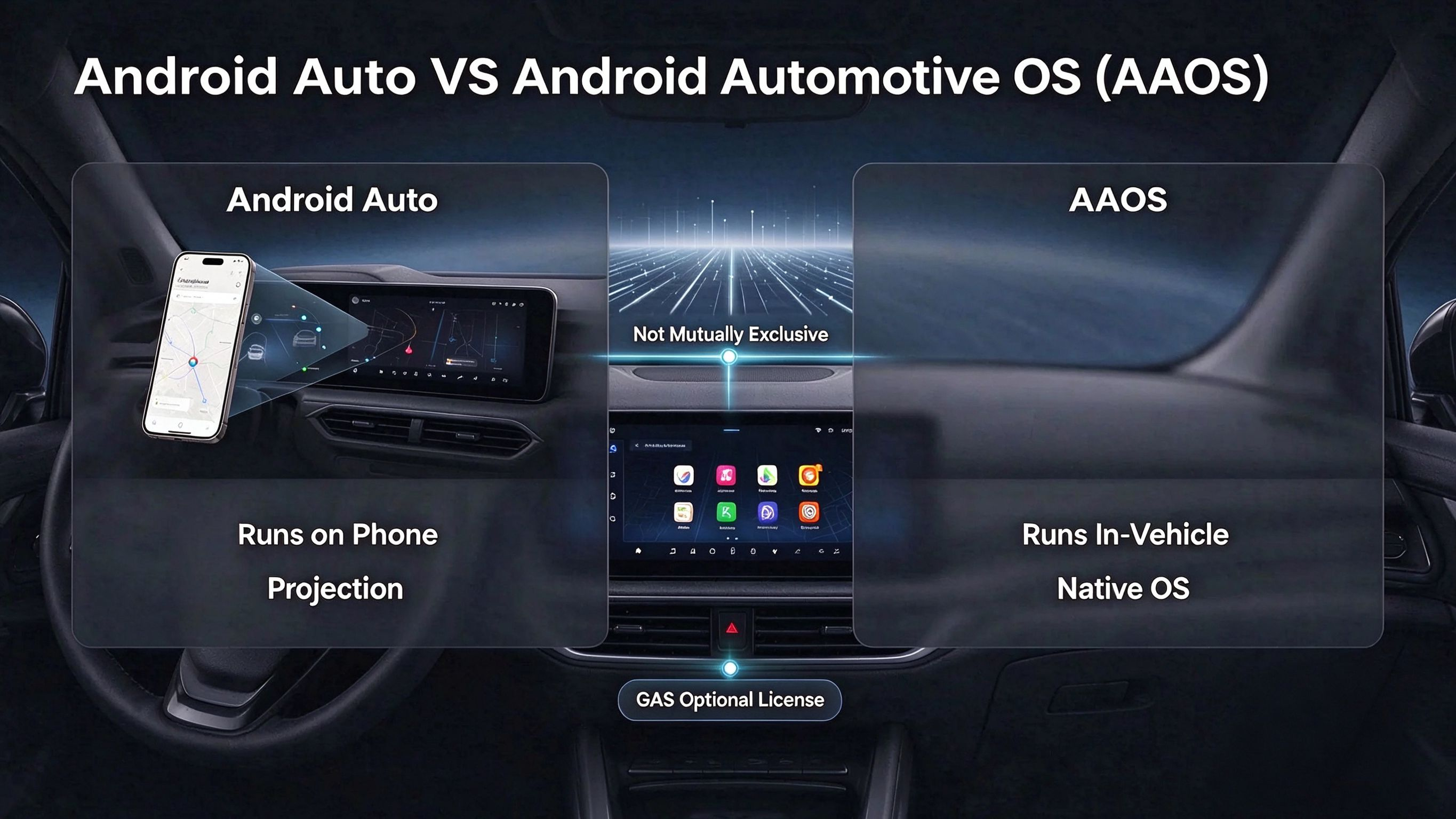
Distinguishing Android Auto from Android Automotive OS at Project Start
閱讀文章
 博客
Defining DAB+ Requirements Before Starting an Automotive Project
閱讀文章
 博客
Why Vehicle Type Approval Starts Before The First Prototype Exists
閱讀文章
 博客
Why Automotive Certification Is Becoming a Software Project
閱讀文章
 博客
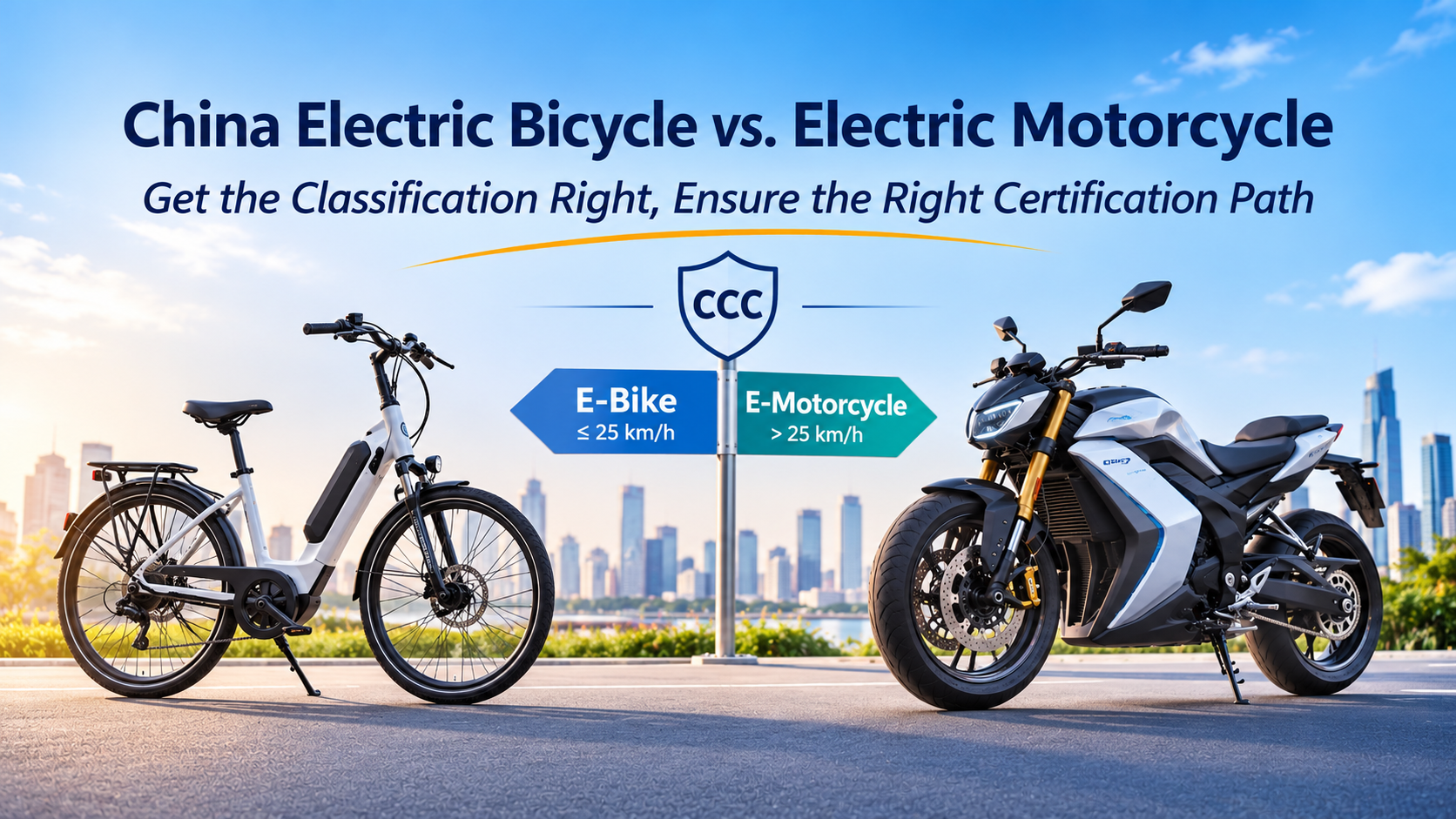
China Electric Motorcycle vs. E-Bike: Why Vehicle Classification Determines the Entire Certi
閱讀文章
 博客
Your Vehicle Passed Type Approval. Can an OTA Update Make It Non-Compliant?
閱讀文章

 4000259520