
 English
 Français
 Español
 日本語
 العربية
 简体中文

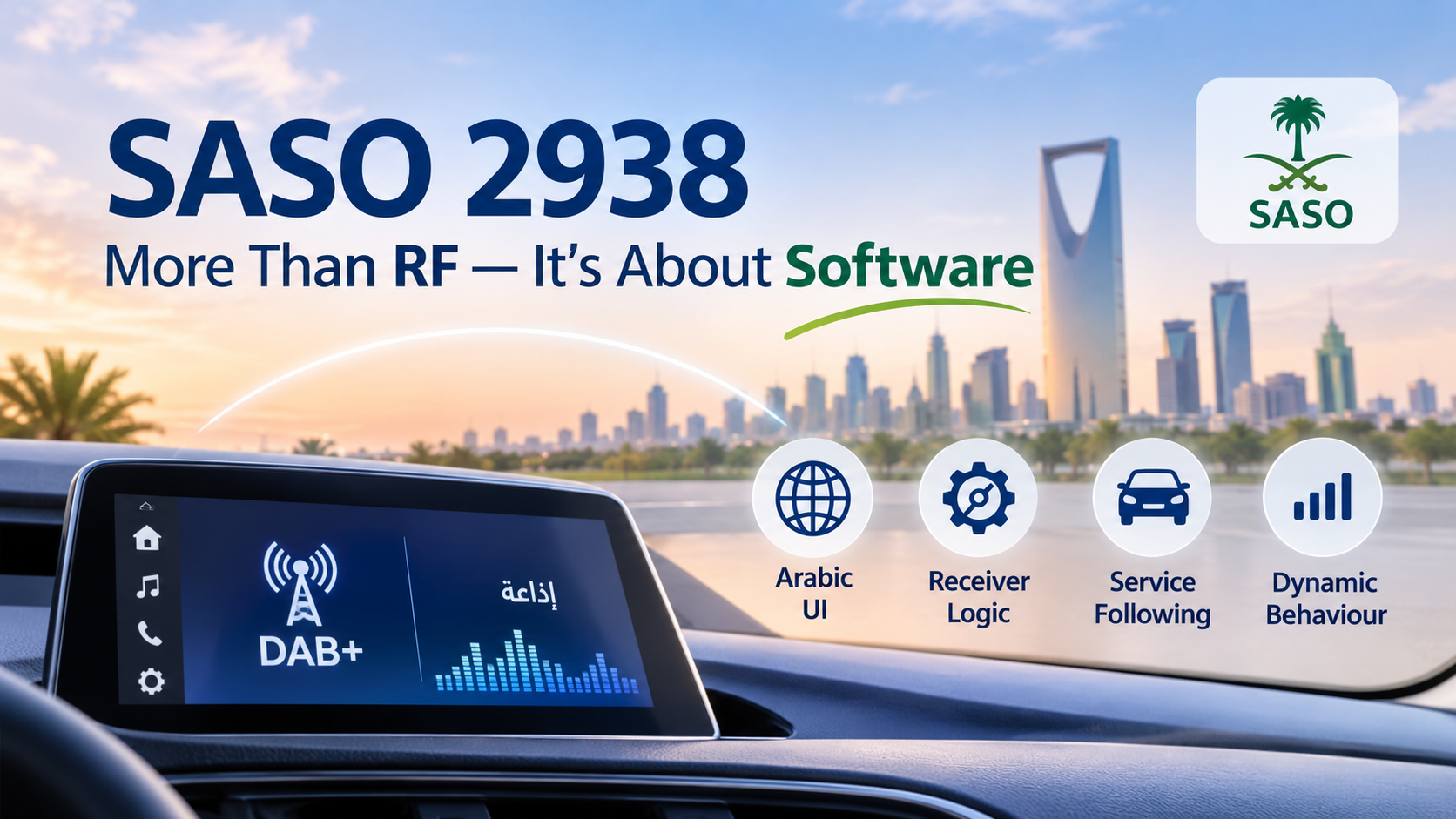
Why SASO 2938 Is Becoming a Software Validation Project
Why SASO 2938 Is Becoming a Software Validation Project
Many companies spend months preparing their RF design.
Saudi Arabia may reject the product because of software behavior.
That's the reality many automotive manufacturers discover too late.
When engineers hear SASO 2938, the first thing that comes to mind is usually DAB+ radio testing.
They focus on:
Receiver sensitivity
RF performance
Antenna efficiency
EMC compliance
These are all important.
But they are no longer enough.
As modern vehicle radio systems become part of Software-Defined Vehicles (SDVs), the biggest challenges are shifting away from hardware and toward software validation.
In many recent projects, the question is no longer:
"Does the receiver work?"
Instead, it becomes:
"Does the software behave correctly in real-world driving conditions?"
That is why SASO 2938 is gradually evolving from an RF-focused project into a software validation project.
The Industry Still Thinks About Hardware
Many development teams still use a traditional certification strategy.
Complete hardware development.
Optimize RF performance.
Perform EMC testing.
Submit certification.
This approach worked well when vehicle radios operated as standalone devices.
Today's infotainment platforms are very different.
The receiver is only one part of a much larger software-controlled system.
Radio behavior is increasingly determined by:
Operating systems
Middleware
User interface software
Audio management
Connectivity software
Vehicle communication
The hardware receives the signal.
The software defines the customer experience.
Saudi Arabia Evaluates More Than RF Performance
One of the biggest misunderstandings is assuming CE RED and SASO 2938 evaluate the same product characteristics.
They do not.
CE RED primarily verifies that radio equipment uses the spectrum correctly and meets safety and EMC requirements.
SASO 2938 goes further.
It also evaluates how the vehicle radio behaves during actual operation.
This means software logic becomes just as important as RF performance.
Four Software Areas That Matter More Than Many Engineers Expect
1. Arabic User Interface
Supporting Arabic is not simply translating menu text.
Manufacturers should also validate:
Character rendering
Right-to-left display
Font compatibility
Screen layout
User interaction consistency
These details directly influence the user experience.
A technically compliant receiver may still require software modifications before meeting market expectations.
2. Receiver Logic
Modern receivers constantly make software decisions.
For example:
Which service should be selected?
When should reception recover?
How should weak signals be handled?
How quickly should the receiver respond?
These behaviors are determined by algorithms—not hardware.
Different software strategies produce different user experiences.
This is why receiver logic has become a key validation area.
3. Service Following
Many customers only notice one thing:
Does the audio continue smoothly while driving?
Behind that simple experience lies complex software.
Service Following requires the receiver to:
Monitor signal quality
Detect alternative services
Switch at the correct moment
Avoid unnecessary interruptions
The RF hardware provides information.
Software decides how to react.
Poor software decisions often create complaints even when RF performance is excellent.
4. Dynamic Behaviour
Vehicle radios operate in constantly changing environments.
Software must continuously adapt to:
Vehicle speed
Coverage changes
Multiple transmitters
Signal fluctuations
Regional frequency transitions
Static laboratory performance is no longer enough.
Manufacturers increasingly need to validate how software behaves under dynamic driving conditions.
Software Is Becoming the Real Differentiator
Ten years ago, most DAB+ receivers offered similar hardware performance.
Today, the biggest differences come from software.
Two receivers may use comparable RF components.
One delivers a smooth listening experience.
The other produces interruptions, slow station switching, or unstable behavior.
The difference isn't the chipset.
It's the software architecture behind it.
OTA Makes Software Validation Even More Important
Another major trend is OTA software updates.
A software update may modify:
Receiver logic
Service Following
Audio processing
User interface behavior
Frequency management
No hardware changes occur.
Yet radio behavior changes immediately.
This creates a new challenge.
Manufacturers must consider not only whether the original software complies with SASO 2938, but also whether future updates continue to comply.
Certification is becoming part of the software lifecycle.
Why Some Projects Fail Near SOP
Many projects begin Saudi certification after:
Hardware is frozen.
Software development is complete.
Vehicle integration has finished.
Only then do engineers discover software behaviors requiring optimization.
Late software modifications often trigger:
Regression testing
Vehicle validation
Additional development
Repeat certification activities
The laboratory did not create the problem.
It simply revealed software issues that had existed throughout development.
The Cost of Treating SASO 2938 as an RF Project
Companies often budget only for laboratory testing.
The larger expenses usually come from engineering changes.
Late software optimization may require:
Additional development
OTA validation
Vehicle testing
New software releases
Project schedule adjustments
For international vehicle programs, these activities can easily add tens of thousands—or even hundreds of thousands of U.S. dollars in engineering costs, significantly exceeding the original certification budget.
The earlier software behavior is validated, the lower the overall project risk.
A Better Strategy for SASO 2938
Leading OEMs and Tier 1 suppliers now evaluate SASO 2938 much earlier.
Instead of focusing only on RF testing, they also validate:
✔ Arabic user interface.
✔ Receiver software logic.
✔ Service Following performance.
✔ Dynamic receiver behavior.
✔ OTA software impact.
✔ System-level vehicle validation.
This integrated approach reduces redesigns and improves first-pass certification success.
Final Thoughts
The automotive industry is entering the era of Software-Defined Vehicles, where software increasingly determines product performance.
That transformation is changing certification as well.
SASO 2938 is no longer only about RF performance.
It is increasingly about how software behaves inside the vehicle, how it responds to changing environments, and how it maintains a consistent user experience throughout the product lifecycle.
Manufacturers that recognize this shift early will reduce certification risk, accelerate market access, and deliver better products to customers.
At BlueAsia, we help OEMs and Tier 1 suppliers prepare for SASO 2938, DAB+, vehicle radio validation, software behavior verification, RF testing, EMC testing, and global automotive certification—helping engineering teams identify software risks long before they become certification problems.
Because today, the receiver receives the signal. The software defines the experience.
 博客
Why Future Vehicle Certification Will Depend On Digital Traceability
閱讀文章
 博客
Why SASO 2938 Is Becoming a Software Validation Project
閱讀文章
 博客
SASO 2938 vs GSO 2693: What the 2026 GCC DAB+ Requirements Mean for In-Vehicle Radio Receive
閱讀文章
 博客
Your UWB Digital Key Passed RF Testing. Is It Ready for Real Vehicle Access?
閱讀文章
 博客
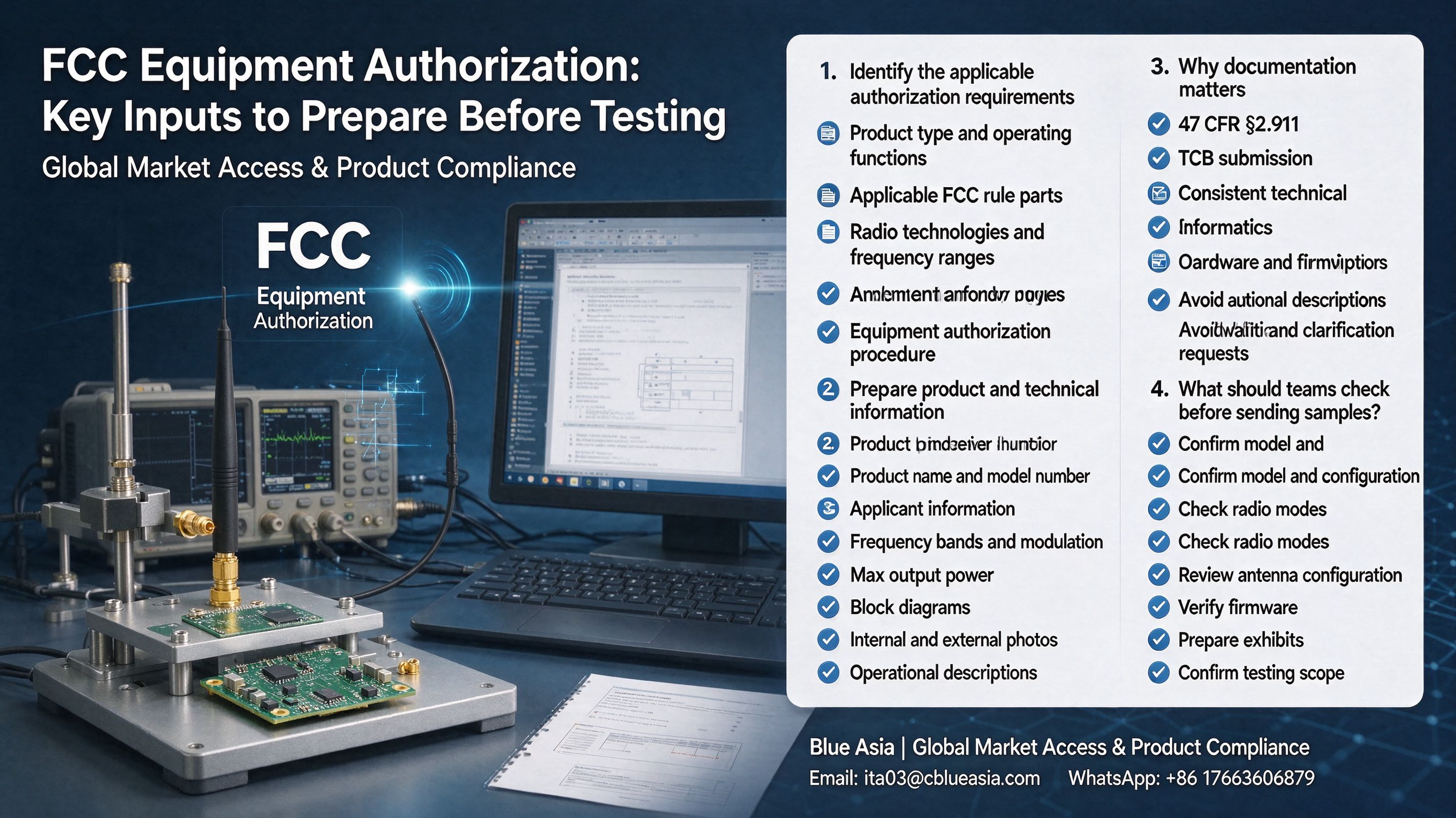
FCC Equipment Authorization: Key Inputs to Prepare Before Testing
閱讀文章
 博客
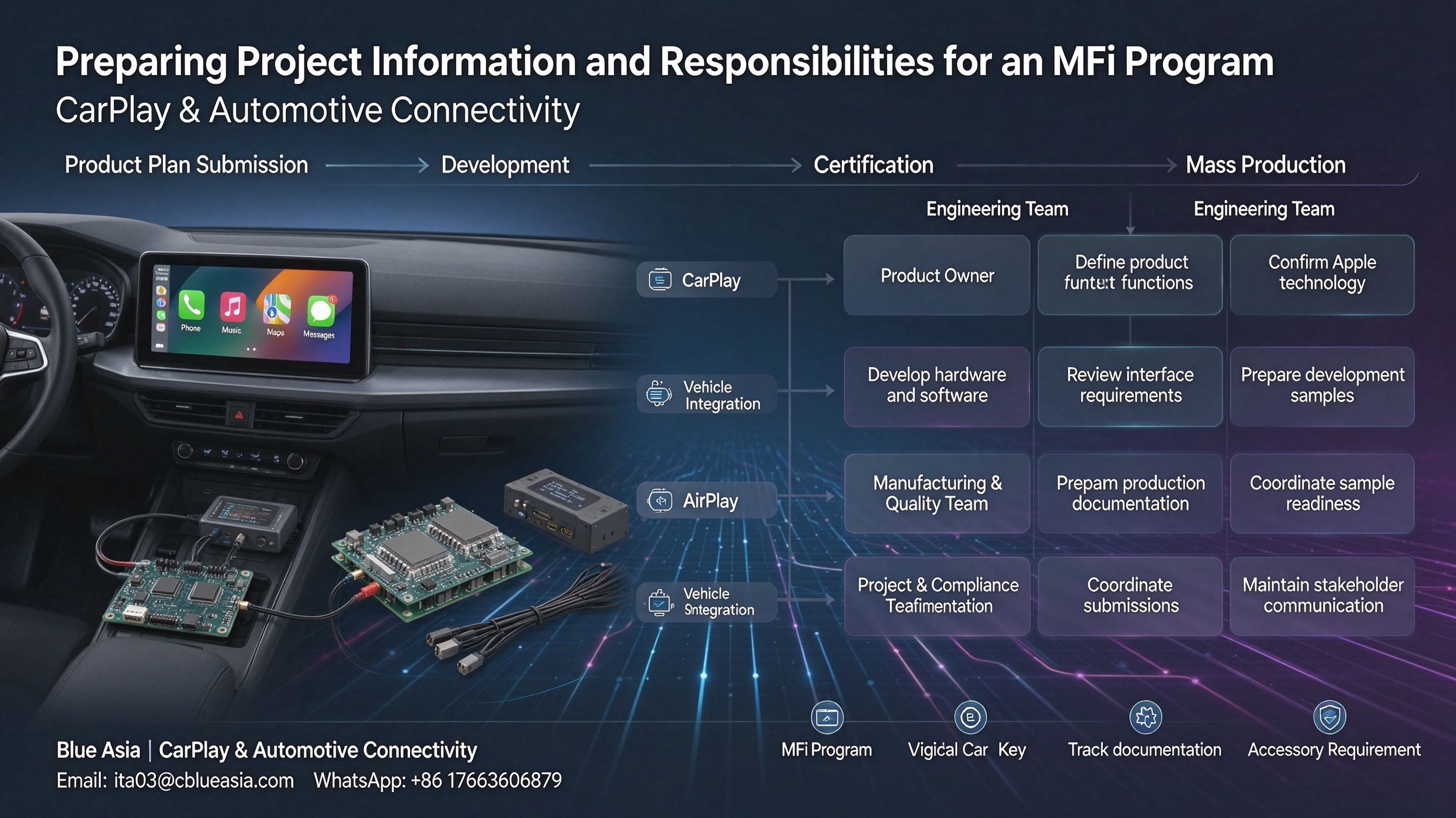
Preparing Project Information and Responsibilities for an MFi Program
閱讀文章

 4000259520