
 English
 Français
 Español
 日本語
 العربية
 简体中文


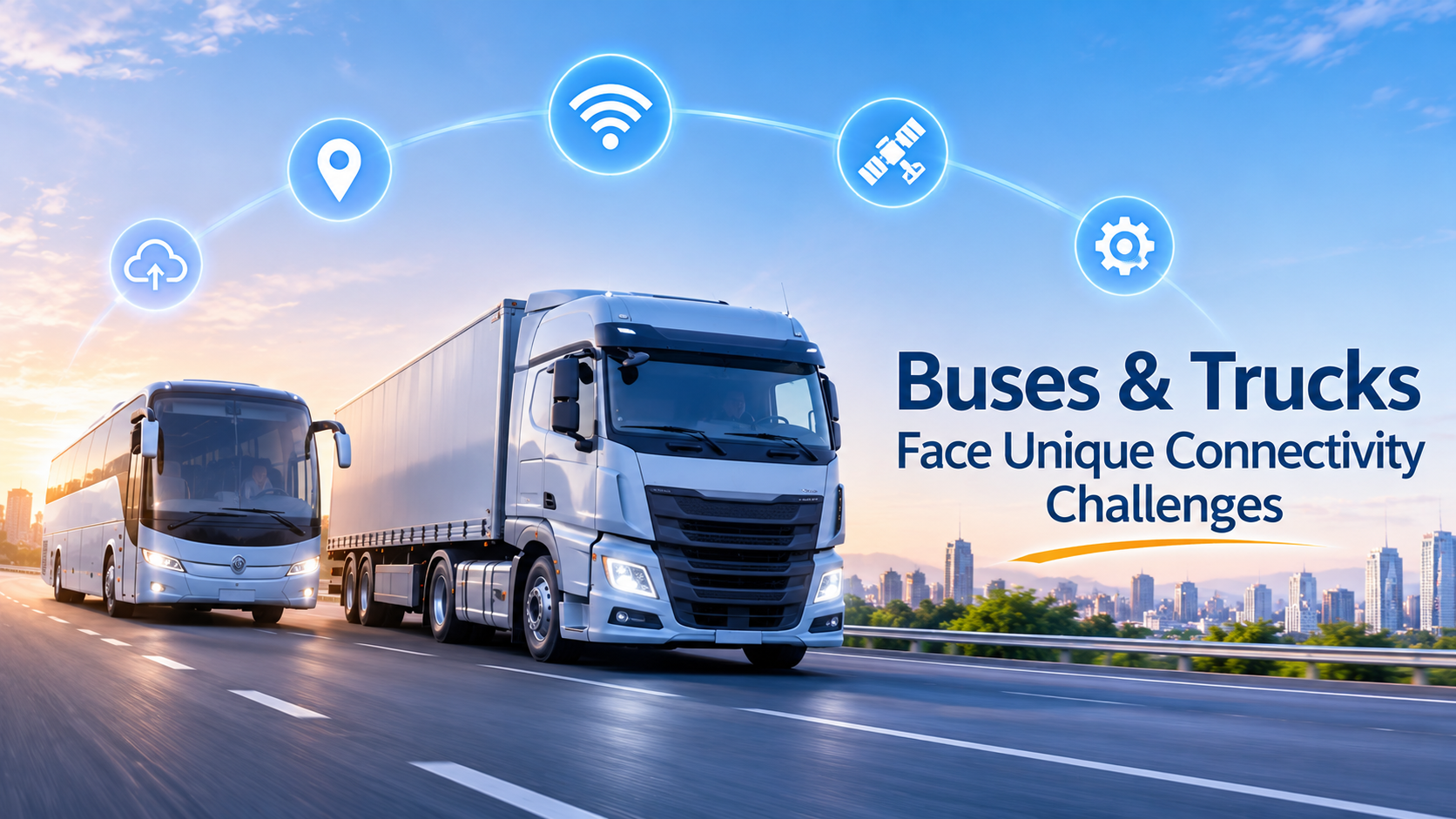
Why Buses And Trucks Face Different Connectivity Challenges Than Passenger Cars
Why Buses And Trucks Face Different Connectivity Challenges Than Passenger Cars
Bigger vehicles don't just carry more passengers.
They carry more connected systems.
When people think about connected vehicles, they often picture passenger cars with digital cockpits, smartphone integration and advanced infotainment.
But some of the biggest connectivity challenges are not found in passenger cars.
They are found in buses, trucks and commercial fleets.
Because for commercial vehicles, connectivity is not simply a convenience.
It is a business-critical capability.
Commercial vehicles have a different mission
A passenger vehicle primarily serves one driver and a small number of passengers.
A commercial vehicle often supports an entire operation.
Modern buses and trucks may rely on:
Fleet management
Remote diagnostics
Driver monitoring
Dispatch systems
Route optimization
Cargo monitoring
Emergency communication
Predictive maintenance
OTA software updates
If one connected system fails, the impact may extend beyond the vehicle itself.
It can affect schedules, deliveries, safety and operational efficiency.
Connectivity is becoming operational infrastructure
For many commercial fleets, connected systems operate continuously throughout the day.
Vehicles exchange information with:
Fleet management platforms
Cloud services
Maintenance systems
Dispatch centers
Navigation services
Unlike consumer applications, these services often require high availability and consistent performance.
The objective is not entertainment.
It is keeping the business running.
More systems create greater integration complexity
Commercial vehicles frequently integrate multiple technologies at the same time.
Examples include:
GNSS positioning
4G/5G communication
Wi-Fi
Bluetooth
Driver monitoring systems
Digital tachographs
Camera systems
Telematics control units
Each system may function correctly on its own.
The challenge begins when all of them operate simultaneously.
Engineering teams must consider:
Shared computing resources
Wireless coexistence
Software interaction
Data synchronization
Real-time performance
Success depends on how well these systems work together—not individually.
Fleet connectivity is changing software development
Modern commercial vehicles continue evolving after deployment.
Fleet operators increasingly expect:
Remote software updates
New digital services
Improved diagnostics
Performance optimization
Security improvements
This means software development no longer ends at production.
Vehicle software becomes part of an ongoing operational lifecycle.
Every update must be managed carefully to avoid disrupting fleet operations.
Compliance extends beyond the vehicle
Commercial vehicle compliance increasingly involves more than hardware testing.
Engineering teams must also consider:
Software lifecycle management
Configuration control
Data traceability
System integration
Continuous validation
Operational reliability
As fleets become more connected, compliance is becoming closely linked to long-term operational performance.
Reliability matters more than adding features
Passenger vehicle customers may appreciate new digital functions.
Fleet operators often prioritize something different.
They value:
Stable connectivity
Predictable performance
Fast diagnostics
Minimal downtime
Reliable updates
A new feature has little value if it interrupts daily operations.
For commercial vehicles, reliability is often the most important feature.
Five questions every commercial vehicle manufacturer should ask
Before launching a connected bus or truck platform, consider:
✅ Can connected systems operate reliably under continuous use?
✅ Have all wireless technologies been validated together?
✅ Can software updates be deployed without disrupting operations?
✅ Does the platform support long-term fleet management?
✅ Can the compliance strategy support the entire vehicle lifecycle?
Answering these questions early helps reduce operational risk after deployment.
Final Thoughts
The future of commercial vehicles is not simply bigger batteries or more powerful engines.
It is smarter connectivity.
As buses, trucks and fleet vehicles become increasingly connected, engineering challenges are shifting from individual components to complete connected ecosystems.
The manufacturers that succeed will not only build reliable vehicles.
They will build reliable connected platforms that support continuous operation, efficient fleet management and long-term compliance.
Because in commercial transportation, connectivity is no longer just a feature.
It is part of the business itself.
Join the discussion
From your perspective, what is the biggest connectivity challenge for commercial vehicles today?
System integration, fleet management, software updates—or something else?
I'd love to hear your thoughts in the comments.
 博客
Why Buses And Trucks Face Different Connectivity Challenges Than Passenger Cars
閱讀文章
 博客
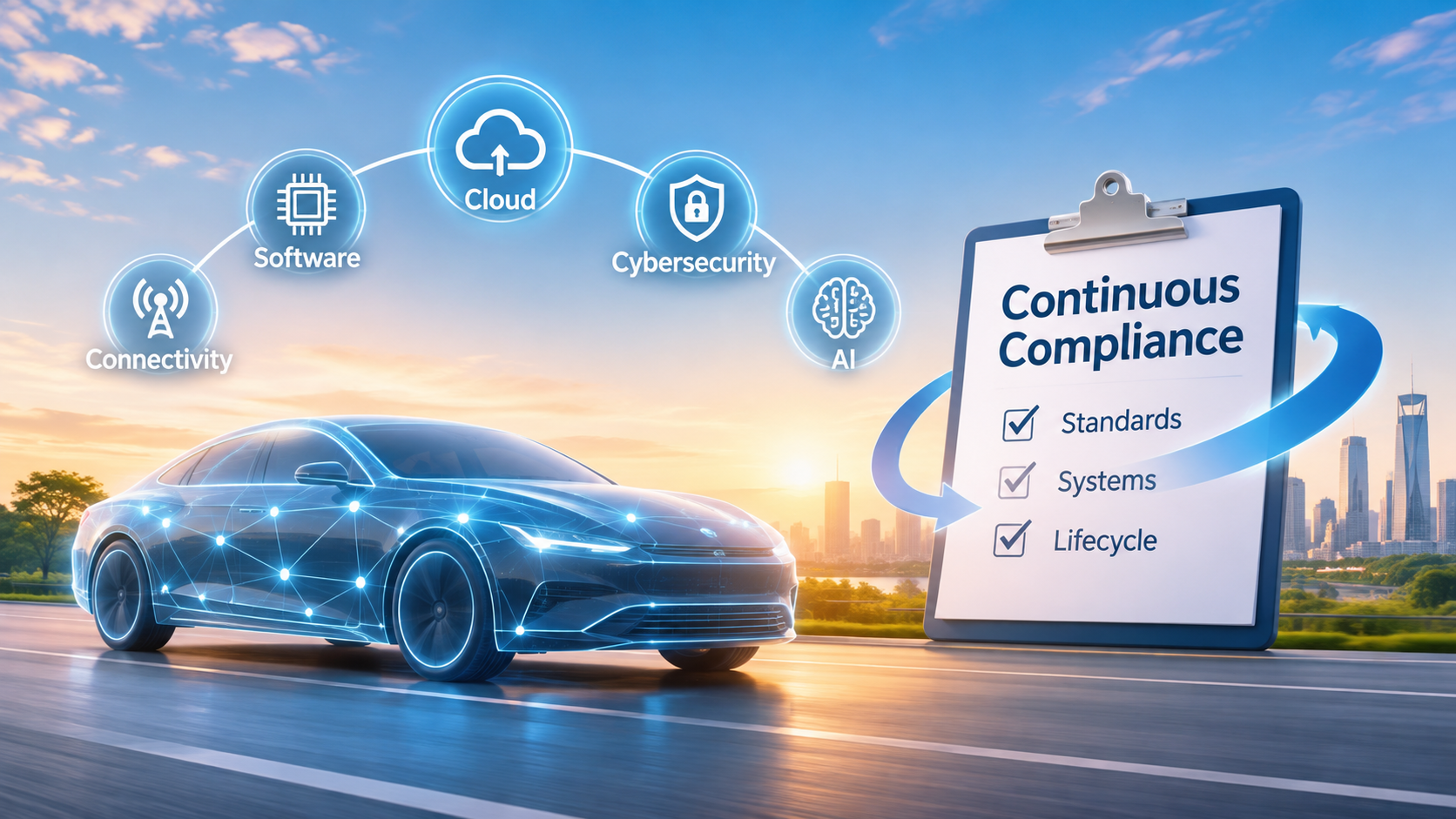
The Future Compliance Engineer Will Need to Understand Systems—Not Standards
閱讀文章
 博客
Trucks and Buses Exported to the Middle East: Do eCall and DAB+ Apply the Same Way?
閱讀文章
 博客
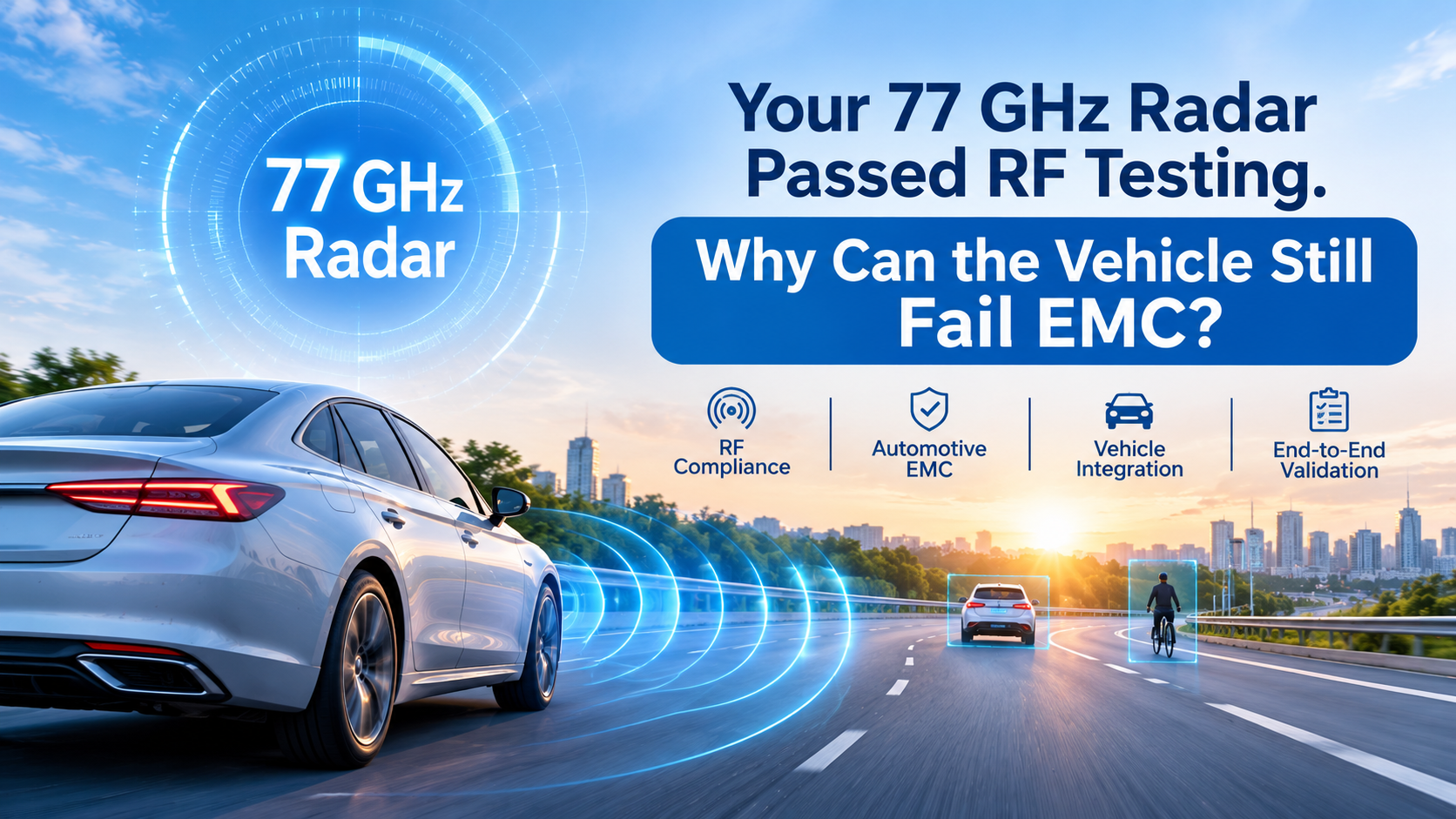
Your 77 GHz Radar Passed RF Testing. Why Can the Vehicle Still Fail EMC?
閱讀文章
 博客
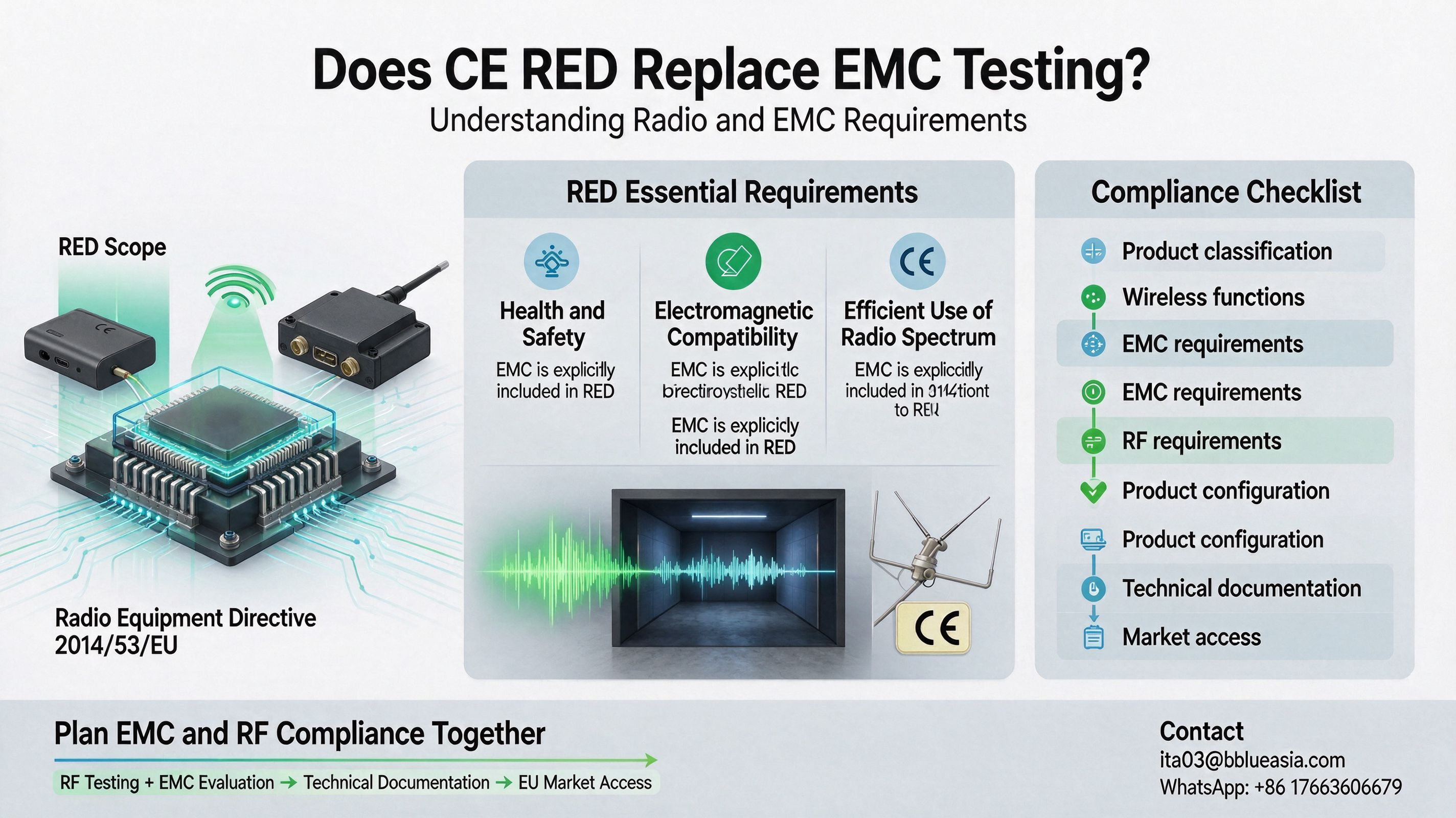
Does CE RED Replace EMC Testing? Understanding the Relationship Between Radio and EMC Requir
閱讀文章
 博客
Does eCall Work Only After a Crash? Understanding Automatic and Manual Trigger Testing
閱讀文章

 4000259520