
 English
 Français
 Español
 日本語
 العربية
 简体中文


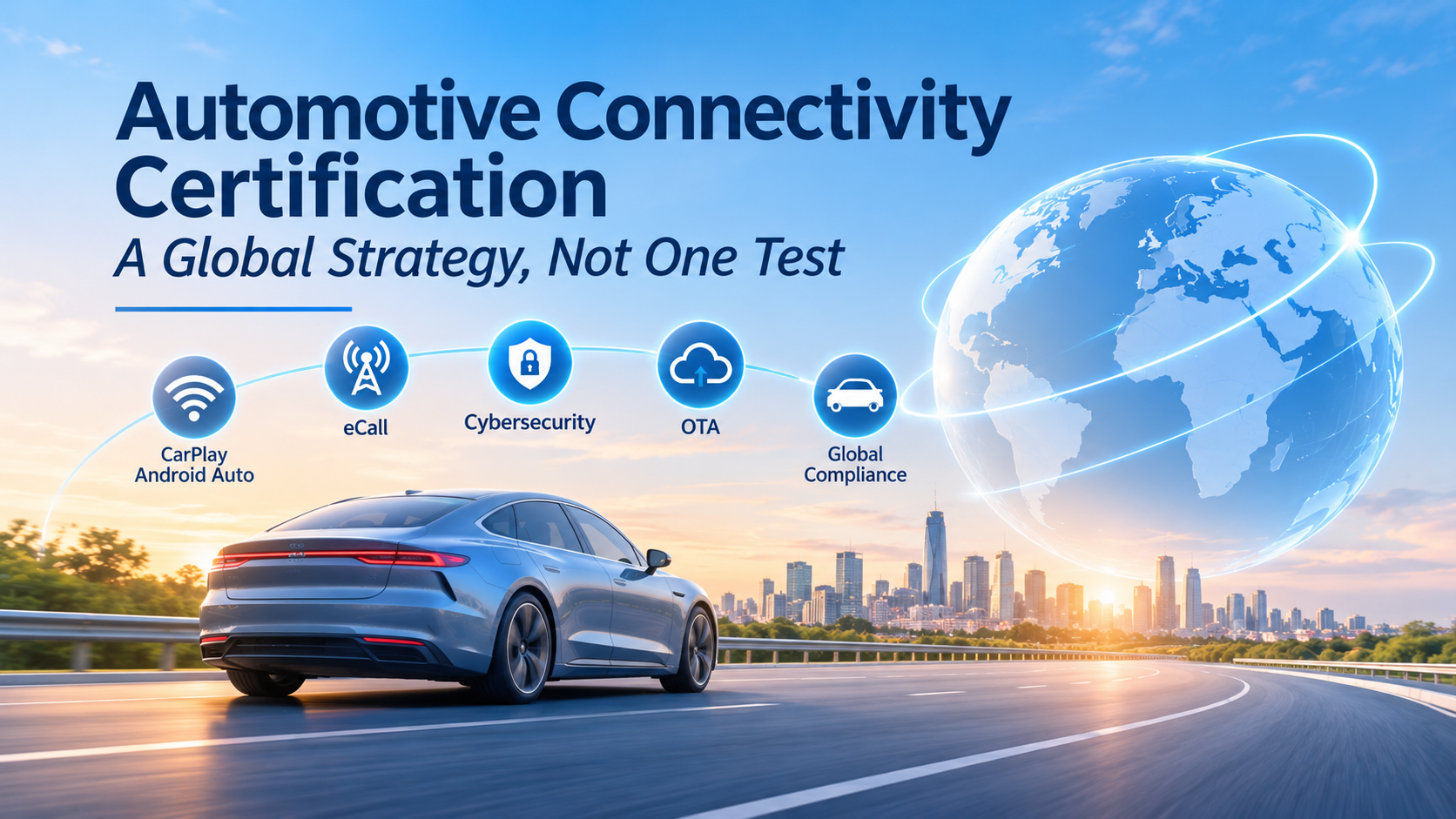
Why Automotive Connectivity Certification Is No Longer About One Test—It's About Building a Global Compliance Strategy
Why Automotive Connectivity Certification Is No Longer About One Test—It's About Building a Global Compliance Strategy
Many companies ask: "Which certification do we need?"
The better question is: "Which markets do we want to enter?"
Because today's automotive connectivity products rarely need just one certification.
They need a global compliance strategy.
As vehicles become increasingly connected, automotive electronics are no longer designed for a single country.
A smart cockpit developed today may eventually be sold in Europe, China, the Middle East, North America, Japan, Australia, and other markets.
The challenge is no longer passing one test.
The challenge is ensuring the same product can successfully enter multiple markets without repeated redesigns, delayed launches, or unnecessary certification costs.
This is why more OEMs and Tier 1 suppliers are shifting from project-based certification to market-oriented compliance planning.
Automotive Connectivity Is Expanding Faster Than Regulations
Today's connected vehicles integrate far more than traditional infotainment.
A single platform may include:
Apple CarPlay
Android Auto
HUAWEI HiCar
eCall / NG eCall
Bluetooth
Wi-Fi
GNSS
Cellular communication
OTA software updates
Cybersecurity
Cloud connectivity
Each technology may trigger different regulatory requirements depending on the destination market.
The product is the same.
The compliance requirements are not.
Certification Starts With Market Planning—Not Laboratory Testing
One of the biggest misconceptions is waiting until product development is complete before considering certification.
By then, changing hardware or software architecture becomes expensive.
Leading manufacturers begin by asking:
Which countries will this product enter?
Which OEM requirements must be satisfied?
Which communication technologies are included?
Which regulations apply to each market?
Which certifications can be combined?
These decisions often determine whether a project finishes on schedule.
Certification should support product planning—not interrupt it.
Different Markets Require Different Compliance Strategies
Many companies assume one successful certification automatically opens every market.
Unfortunately, automotive compliance doesn't work that way.
Europe
Products may need to address:
eCall / NG eCall
CE RED
EMC
Cybersecurity requirements
Vehicle Type Approval
China
Projects may involve:
GB 44495 (Cybersecurity)
GB 44496 (Software Update Management)
SRRC
National radio requirements
Saudi Arabia
For connected vehicle radio systems, manufacturers increasingly evaluate:
SASO 2938
DAB+ software behavior
Arabic user interface
Service Following
Dynamic receiver performance
North America
Projects may require:
FCC
Automotive OEM specifications
Wireless interoperability
Connected vehicle validation
Although the hardware platform may remain the same, every market introduces unique regulatory expectations.
Why Smart Cockpit Platforms Create New Challenges
The modern smart cockpit is no longer just an infotainment system.
It is a connected software platform.
Functions such as:
CarPlay
Android Auto
HiCar
Voice assistants
Navigation
Cloud services
OTA updates
all operate on the same architecture.
Updating one feature may influence another.
For example:
A software update intended to improve Android Auto performance could unintentionally affect:
Wi-Fi behavior
Bluetooth coexistence
CarPlay stability
eCall communication
Cybersecurity validation
The issue isn't the individual application.
It's the interaction between systems.
Certification Is Moving From Components to Systems
Traditionally, engineers validated:
✔ RF
✔ EMC
✔ Software
✔ Connectivity
independently.
Today, OEMs increasingly evaluate whether the entire connected vehicle ecosystem continues operating correctly.
Questions now include:
Will OTA updates affect compliance?
Does software version control remain traceable?
Can cybersecurity risks be managed throughout the lifecycle?
Does cloud connectivity influence regulated functions?
Will future smartphone ecosystem updates change system behavior?
These are system-level questions—not laboratory questions.
The Hidden Cost of Poor Compliance Planning
Many companies focus on laboratory testing costs.
However, the largest expenses often occur after development.
Poor planning may lead to:
Hardware redesign
Software redevelopment
Additional certification rounds
Market launch delays
Repeat RF and EMC testing
Extended OEM approval cycles
For multinational vehicle programs, these issues can easily cost tens of thousands—or even hundreds of thousands of U.S. dollars, far exceeding the original testing budget.
Most certification delays are not caused by laboratory failures.
They are caused by planning too late.
How Leading OEMs Reduce Certification Risk
Successful automotive companies no longer treat certification as a final milestone.
Instead, they build compliance into product development.
A practical strategy includes:
✔ Defining target markets before hardware design.
✔ Identifying all applicable regulations early.
✔ Integrating software, RF, cybersecurity, and connectivity reviews.
✔ Evaluating OTA impact before software releases.
✔ Maintaining complete software version and configuration traceability.
✔ Planning global certifications together instead of one market at a time.
This approach reduces engineering changes and shortens time-to-market.
Why Compliance Is Becoming a Competitive Advantage
As vehicles become more connected, compliance is no longer simply about passing tests.
It has become part of product quality.
Manufacturers that understand regulatory differences early can:
Launch products in more countries faster.
Reduce repeated engineering work.
Improve first-pass certification rates.
Shorten OEM approval cycles.
Lower long-term compliance costs.
In the era of Software-Defined Vehicles, compliance is becoming a business strategy—not just a technical requirement.
Final Thoughts
Automotive connectivity is evolving faster than ever.
Technologies such as CarPlay, Android Auto, HiCar, NG eCall, OTA, cloud services, and cybersecurity are transforming how vehicles are developed—and how they are certified.
The companies that succeed globally won't be those that simply pass one certification.
They will be those that build a global compliance strategy from the very beginning.
At BlueAsia, we support OEMs and Tier 1 suppliers with end-to-end compliance services for HiCar, CarPlay, Android Auto, eCall, NG eCall, GB 44495/44496, EMARK, SASO 2938, DAB+, RF, EMC, and global automotive market access—helping engineering teams reduce certification risk before it impacts production.
Because in today's connected vehicle industry, successful certification doesn't begin in the laboratory. It begins with the right compliance strategy.
 博客
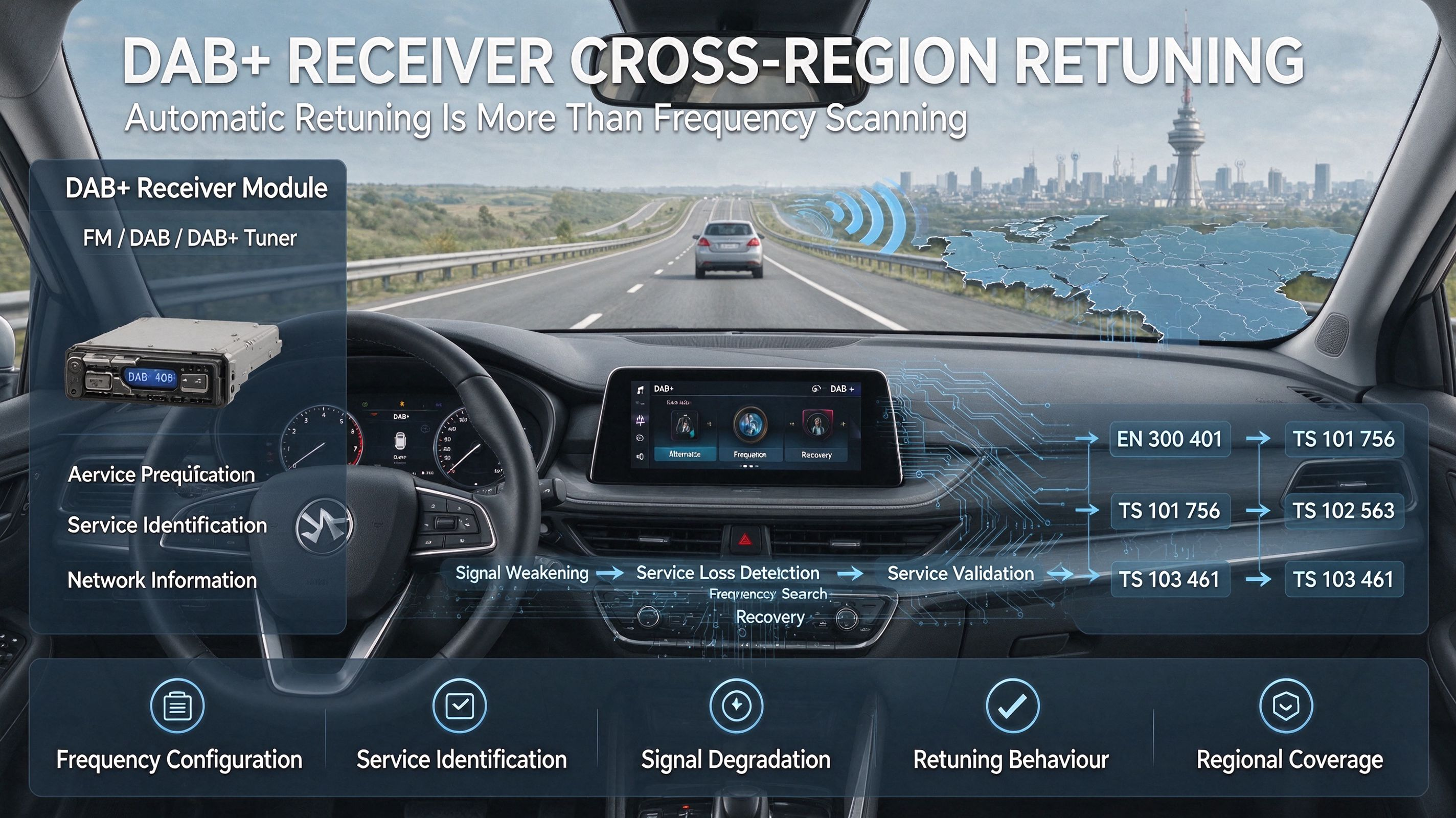
Does Your DAB+ Receiver Know When to Retune? Cross-Region Driving Can Expose Hidden Design I
閱讀文章
 博客
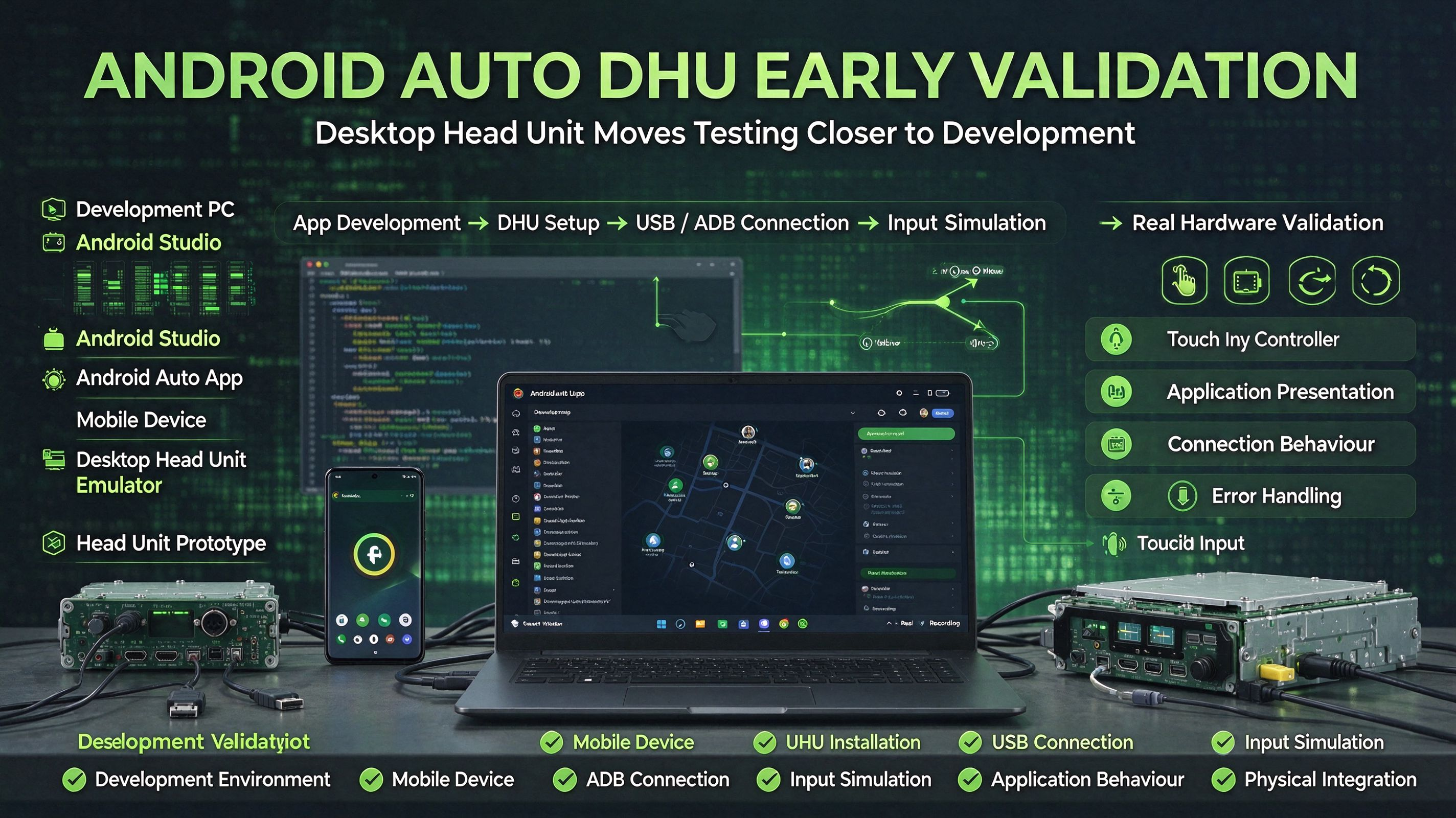
Are You Testing Android Auto Too Late? The Desktop Head Unit Can Help Move Validation Earlie
閱讀文章
 博客
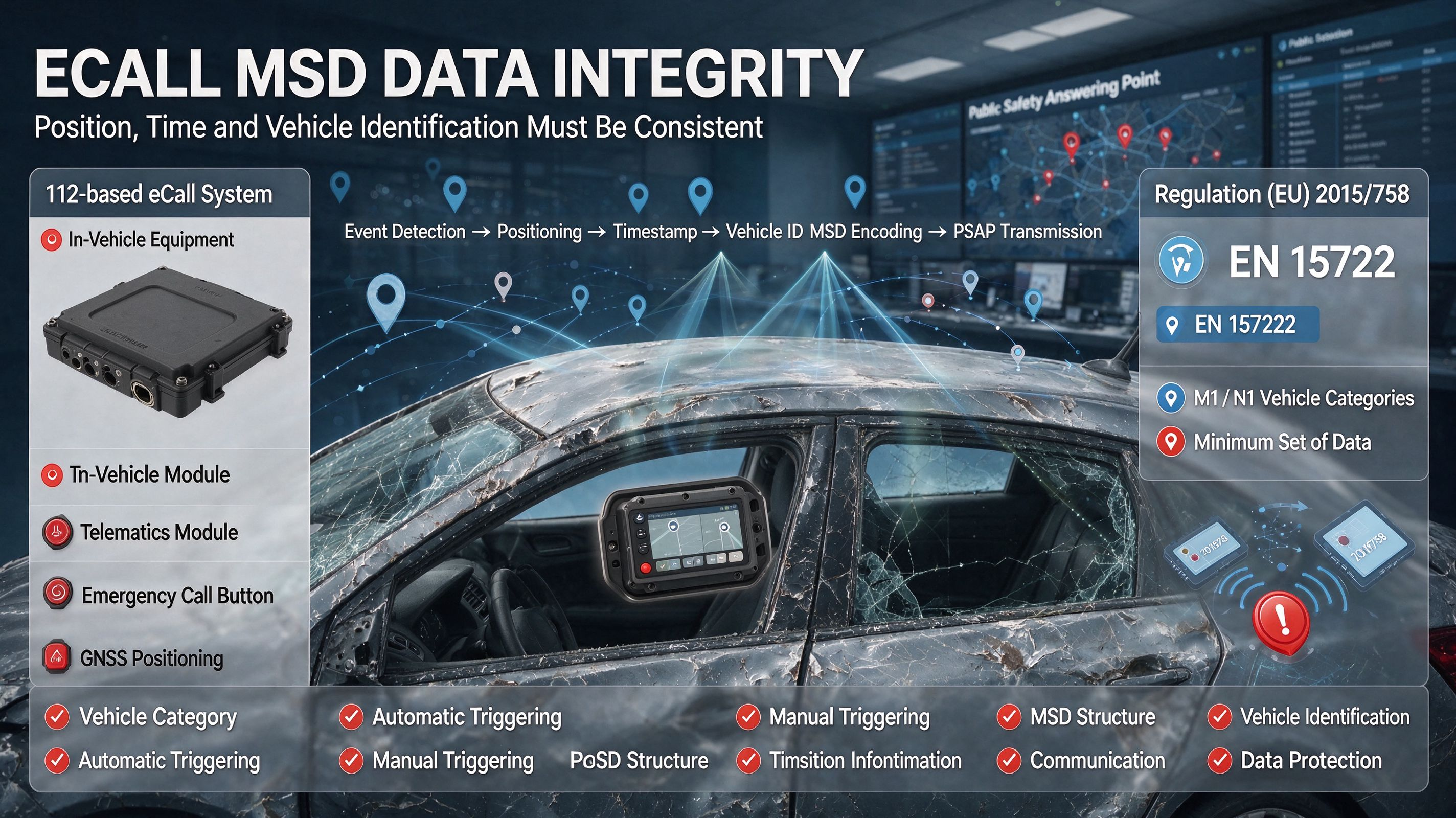
Can Your eCall System Transmit the Right Data? Position, Time and Vehicle Identification Mat
閱讀文章
 博客
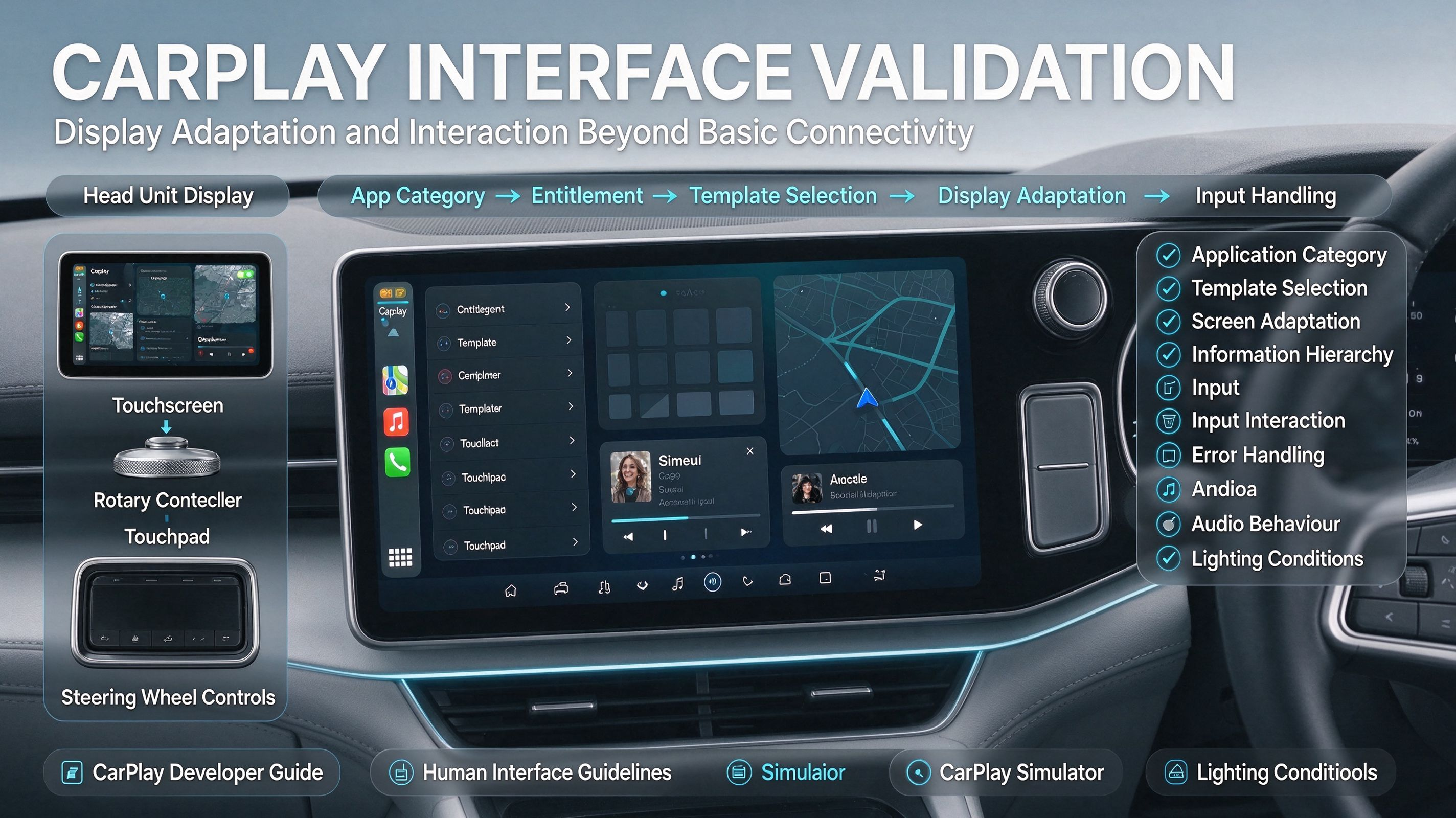
Does Your CarPlay Interface Really Fit the Vehicle? Display and Interaction Need More Than B
閱讀文章
 博客
Why The Best Compliance Strategy Is To Design Products That Never Need Retesting
閱讀文章
 博客
Why Automotive Connectivity Certification Is No Longer About One Test—It's About Buildi
閱讀文章

 4000259520