
 English
 Français
 Español
 日本語
 العربية
 简体中文

Does eCall Work Only After a Crash? Understanding Automatic and Manual Trigger Testing
Contact:
Email: [email protected]
WhatsApp: +86 17663606879
Does eCall Work Only After a Crash? Understanding Automatic and Manual Trigger Testing
An emergency call system is expected to operate when it matters most.
But when validating an in-vehicle eCall system, is checking automatic activation after a crash enough?
For automotive OEMs and Tier 1 suppliers, understanding the different trigger conditions and verification procedures is essential when preparing an eCall project for type approval.
1. Understanding the Regulatory Framework
Commission Delegated Regulation (EU) 2017/79 establishes detailed technical requirements and test procedures for the EC type-approval of vehicles equipped with 112-based eCall in-vehicle systems, separate technical units and relevant components.
The Regulation applies from 31 March 2018.
Its annexes address several technical areas, including:
Full-scale impact test assessment.
Co-existence of third-party services.
Automatic triggering mechanisms.
In-vehicle system self-testing.
Privacy and data protection.
These requirements go beyond simply checking whether a call can be initiated.
2. Automatic Triggering: What Happens After an Impact?
Automatic triggering is a central function of the 112-based eCall system.
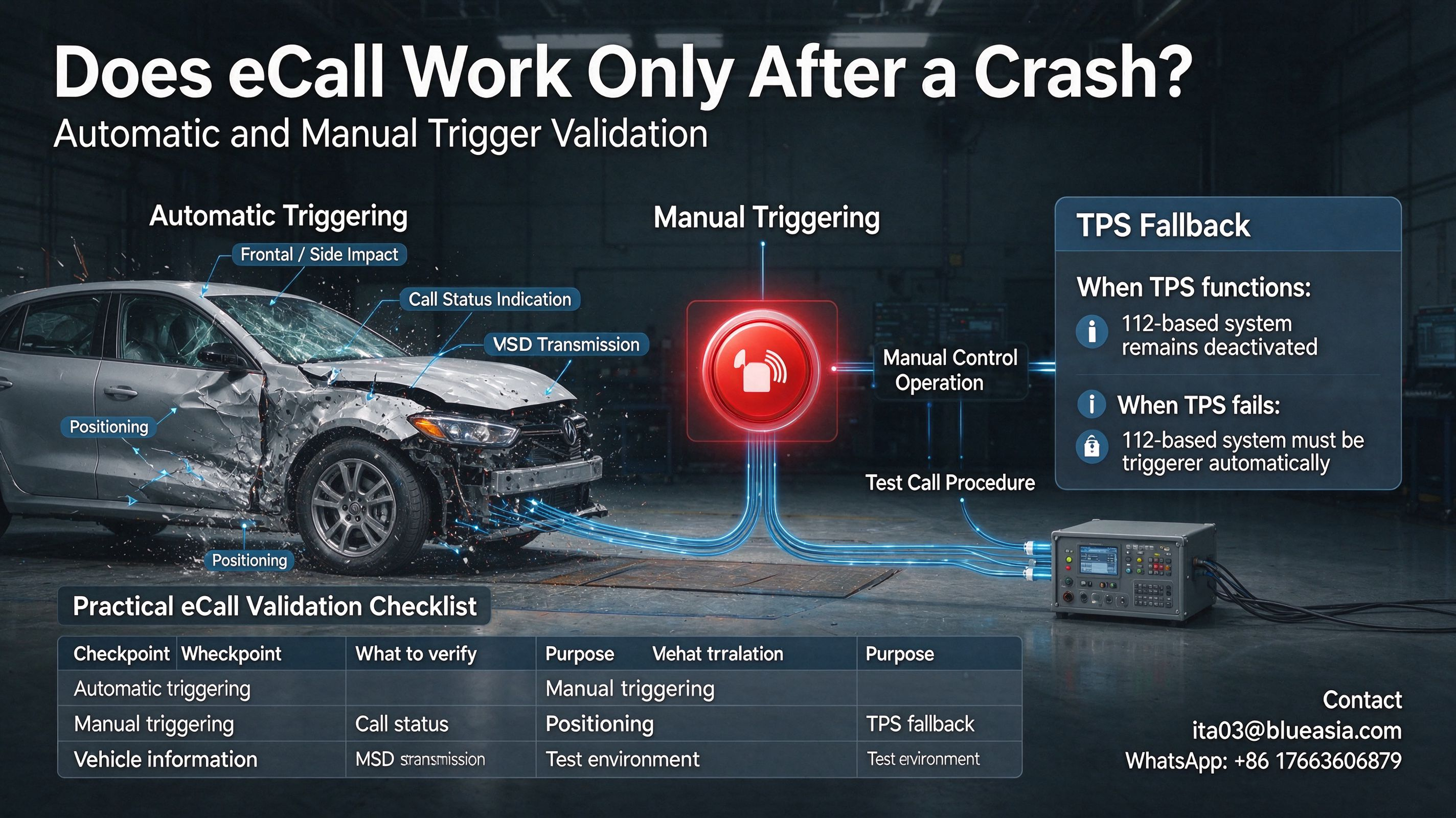
Under Annex II, the full-scale impact assessment addresses whether the system automatically initiates an eCall following an applicable frontal or side impact test.
The verification also considers:
Call status indication
The system must inform occupants about the current eCall status through a visual and/or audible signal.
Minimum Set of Data (MSD)
The system must successfully transmit and encode the required MSD for reception at a dedicated PSAP test point.
Vehicle-specific information
The mandatory vehicle-specific data fields must be populated accurately.
Position information
The system must determine the vehicle's up-to-date location.
Therefore, successful call initiation is only one part of the overall verification.
3. Manual Triggering: Another Important Verification Scenario
Manual triggering allows the eCall function to be initiated through the system's manual control.
The regulation also includes manual test-call procedures.
For example, Annex IV addresses the interaction between a third-party service (TPS) and the 112-based eCall system.
When the TPS system is active and functioning, the 112-based system should remain deactivated.
The regulation also requires verification of the fallback behavior when the TPS system does not function.
This makes manual test calls particularly relevant when evaluating the interaction between the two systems.
4. What Happens If the Third-Party System Fails?
For vehicles equipped with an optional third-party emergency call service, the fallback mechanism deserves particular attention.
The relevant requirements address two situations:
When the TPS system functions, the 112-based system remains deactivated.
When the TPS system fails, the 112-based system must be automatically triggered as required.
The test procedure includes simulating a TPS failure and performing a manually triggered test call to verify that the 112-based system can establish communication with the dedicated PSAP test point.
The verification includes checking the reception of the MSD.
This is an important distinction: testing a manual trigger does not mean the fallback itself is manually initiated. The manual action is used as the test stimulus to verify the required fallback behavior.
5. Practical eCall Validation Checklist
For project planning, automotive development teams can organize their verification activities as follows:
| Checkpoint | What to verify | Purpose |
|---|---|---|
| Automatic triggering | Activation after applicable impact tests | Verify automatic emergency-call initiation |
| Manual triggering | Operation of the manual control | Verify manual call initiation |
| Call status | Visual and/or audible indication | Confirm system status communication |
| MSD transmission | Data reception and successful decoding | Verify emergency data delivery |
| Vehicle information | Mandatory vehicle-specific fields | Check data accuracy |
| Positioning | Current vehicle location | Verify positioning information |
| TPS fallback | Simulated TPS failure and 112-based response | Verify fallback behavior |
| Test environment | Dedicated PSAP test point and prevention of unintended live calls | Ensure controlled testing |
The regulatory requirements should be distinguished from additional project-level checks. The exact test scope depends on the applicable annex, system configuration and type-approval procedure.
6. Planning eCall Testing Before Type Approval
For OEMs and automotive suppliers, eCall validation involves coordination between system architecture, vehicle integration, software configuration and test execution.
Preparing the relevant documentation, identifying trigger conditions and establishing a controlled test environment can help reduce avoidable issues during the approval process.
Blue Asia provides third-party testing and certification services for electronic products, including EMC, RF and global market access-related services.
For automotive electronics projects, we welcome opportunities to discuss relevant testing requirements and project coordination.
Contact:
Email: [email protected]
WhatsApp: +86 17663606879
 博客
Why Buses And Trucks Face Different Connectivity Challenges Than Passenger Cars
閱讀文章
 博客
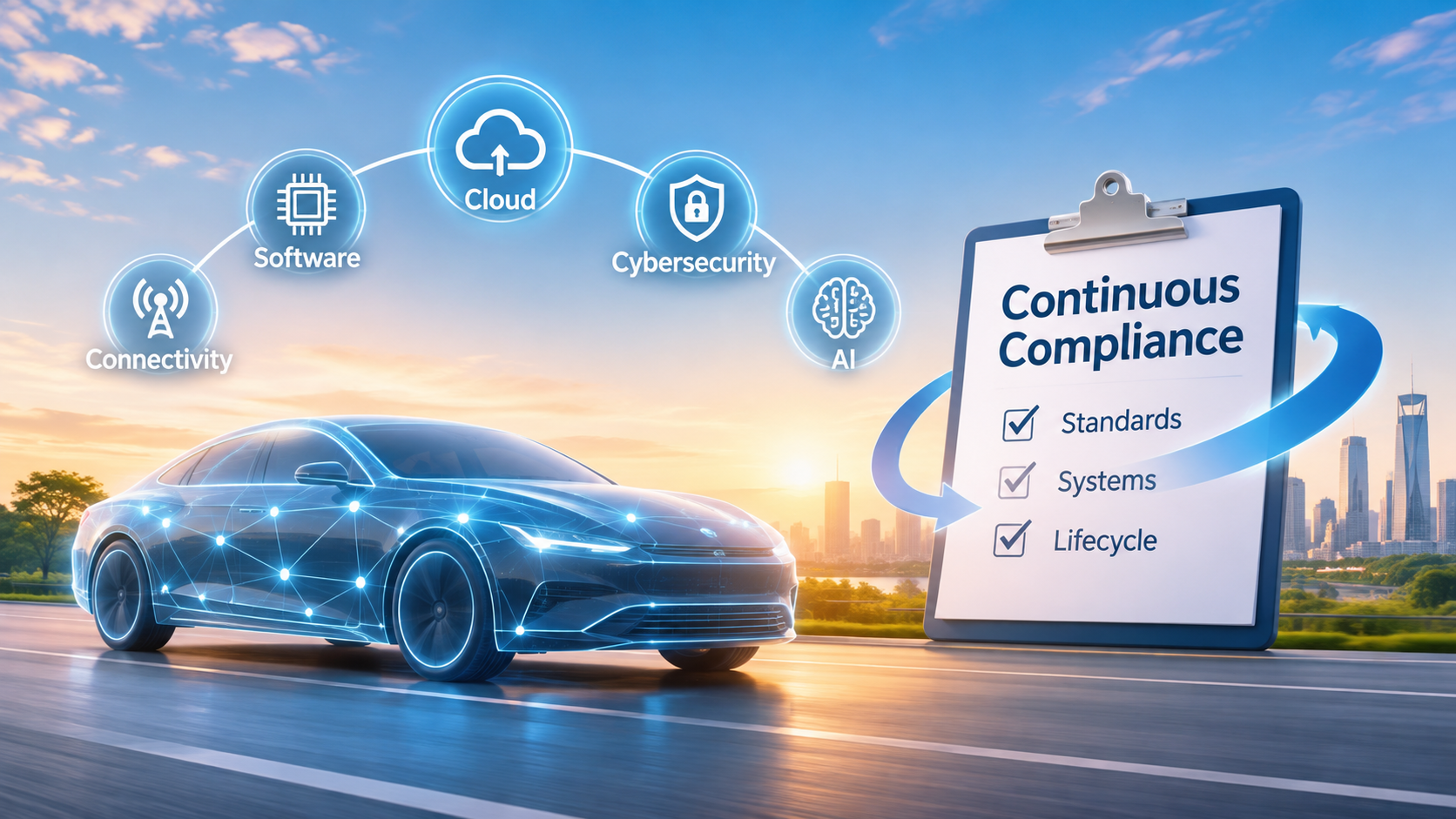
The Future Compliance Engineer Will Need to Understand Systems—Not Standards
閱讀文章
 博客
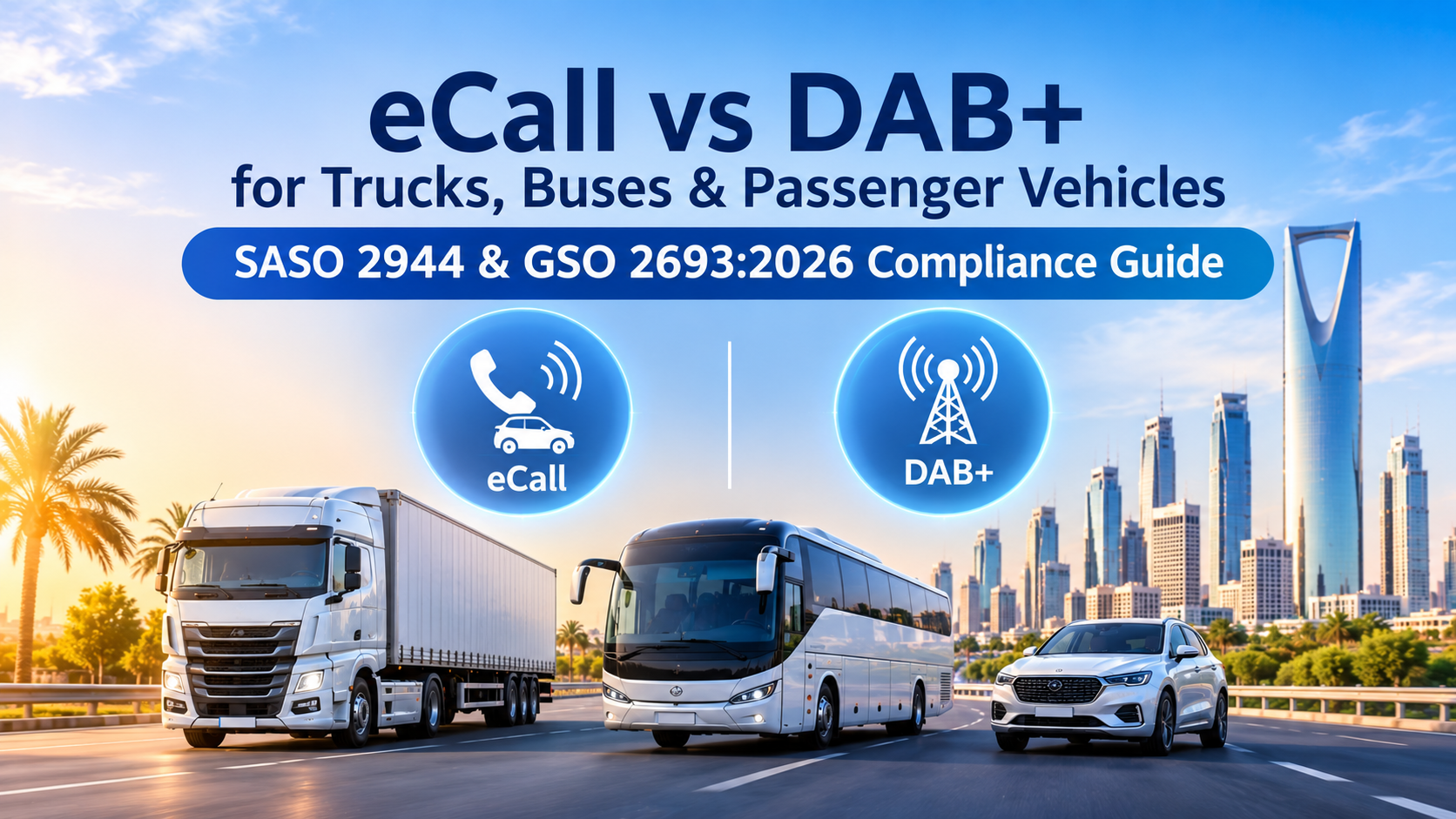
Trucks and Buses Exported to the Middle East: Do eCall and DAB+ Apply the Same Way?
閱讀文章
 博客
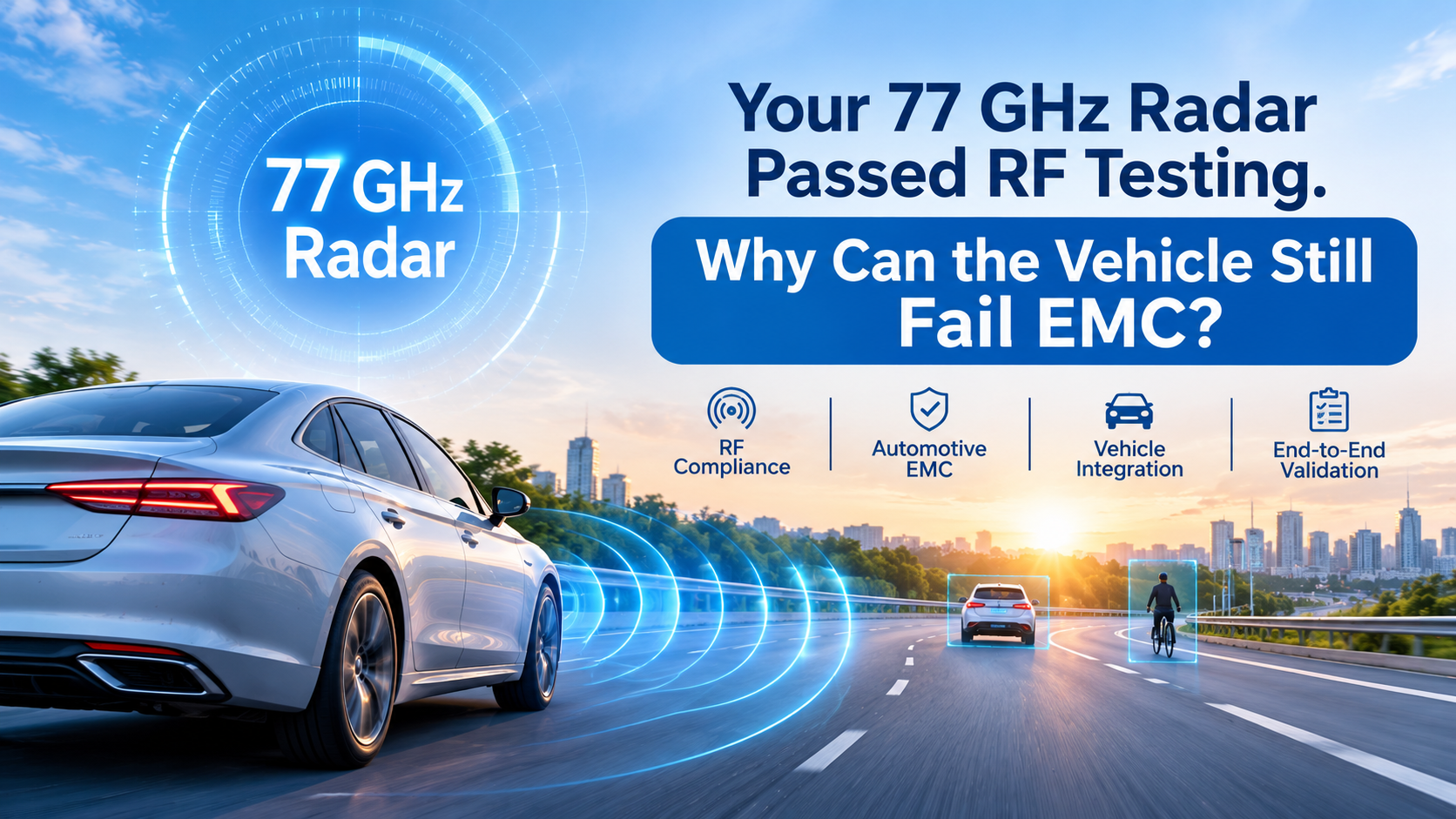
Your 77 GHz Radar Passed RF Testing. Why Can the Vehicle Still Fail EMC?
閱讀文章
 博客
Does CE RED Replace EMC Testing? Understanding the Relationship Between Radio and EMC Requir
閱讀文章
 博客
Does eCall Work Only After a Crash? Understanding Automatic and Manual Trigger Testing
閱讀文章

 4000259520